
If you or a loved one have decided it isn’t worth the effort of attempting to reverse age-related immobility, because you have heard some version of this discouraging narrative:
“As you age, your joints simply wear out. Arthritis is inevitable, and muscle stiffness is just part of the package.”
You aren’t alone.
Many individuals blindly accept this as a life sentence to a sedentary lifestyle. They watch their mobility shrink, believing their body is permanently broken down.
But what if the medical assumption that aging equals immobility is fundamentally incorrect? What if your musculoskeletal system is capable of far more resilience than you have been led to believe?
I’m Dr. Jeff Cumro. Over the past 16 years, I have been incredibly blessed to work with over 5,000 patients in the Nebraska City and surrounding area, using a combination of functional medicine, functional neurology, and chiropractic care. In my years of clinical practice, I have witnessed firsthand that physical decline is not a mandatory byproduct of accumulating birthdays.
The scientific evidence confirms it: mobility can be gained back, joint degeneration can be mitigated, and your muscles can retain their youthful functional capacity – even in the presence of severe arthritis.
Let’s dive into the clinical science of why your muscles are the secret weapon to reversing age-related immobility, and how you can reclaim the fluid movement you were born with.
The Breakthrough Science: Why Your Muscles Don’t Care How Old You Are
When we talk about joint degeneration, bone spurs, or “bone-on-bone” conditions, we are looking at a breakdown of the osteoligamentous system (the framework comprising bones and ligaments).
A seminal landmark study published by Boyd-Clark et al. (2002) investigated the precise relationship between structural changes in the neck and the surrounding musculature. What the researchers discovered shifts our entire understanding of rehabilitative medicine.
Even when there is a significant structural breakdown in the osteoligamentous system – such as advanced osteoarthritis – the surrounding muscle tissue fundamentally retains its functional capacity.
This means that from a cellular and mechanical perspective, your muscles still possess the innate capacity to fire, stabilize, and move your body in the exact same manner they did when you were 30 years old.
While structural changes in the bone are real, they do not automatically strip away the power of your soft tissues. If we preserve the health, flexibility, and performance of these soft tissues, we drastically minimize the physical friction and subsequent wear-and-tear placed on the compromised joint.
While keeping your muscles functional may not instantly erase every ache from a damaged joint, it changes the mechanical equation. Dynamic, healthy muscles shield your skeleton, reducing painful friction and providing an internal scaffolding that keeps you safely in motion.
The 10-Year Echo: How Past Trauma Leads to Modern Joint Stiffness
If arthritis is not driven entirely by aging, what actually causes it? The answer often lies hidden in your personal history.
Consider another fascinating insight from sports medicine and orthopedic research(Bring et al., 2002): when an individual suffers a localized trauma to the soft tissues of the neck – such as a high-impact football injury, a slip-and-fall, or a whiplash incident from a car accident – the immediate bone structure often looks completely normal on an initial X-ray.
However, fast forward exactly 10 years later. Without fail, that precise site of unaddressed soft-tissue trauma will display clear, radiographic signs of advanced arthritis.
Initial Soft Tissue Trauma
▼
Neglected Rehabilitation / Hidden Structural Misalignment (Altered Mechanical Joint Stress)
▼
Compounded Over 10 Years (Radiographic Signs of Arthritis)
This 10-year echo occurs because an unhealed soft-tissue injury radically alters the movement mechanics of the joint. The nervous system begins altering muscle firing patterns to guard the injured area, causing localized immobility.
Because the joint is no longer gliding smoothly along its natural physiological pathway, it undergoes chronic friction. Over a decade, this mechanical grinding causes the body to lay down protective bone spurs, culminating in what conventional medicine misdiagnoses as “normal, age-related wear and tear.”
The root cause wasn’t the passage of time; it was an untreated functional imbalance that began a decade prior.
The Cellular Changes of Aging: Dehydration and Muscle Tensile Strength
While chronological aging doesn’t stop your muscles from functioning properly, it does bring about subtle physiological shifts that require intentional lifestyle adjustments. The most notable shift occurs at the extracellular matrix level: cellular dehydration.
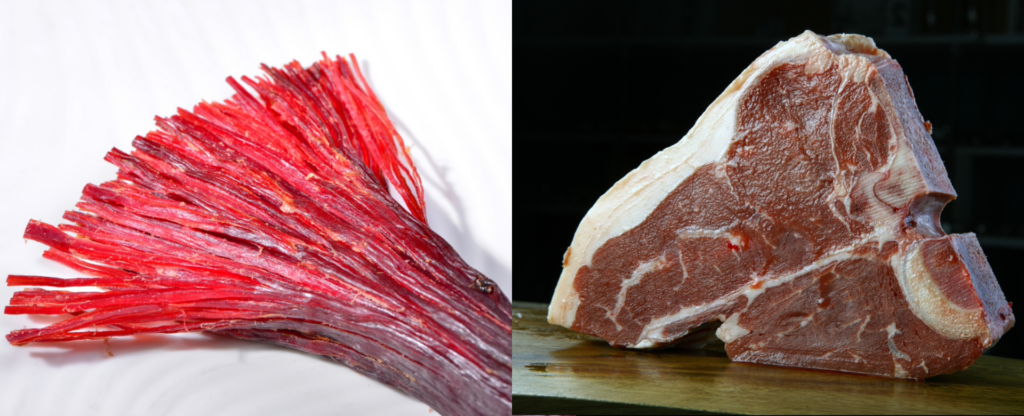
As we age, our bodies gradually lose their natural efficiency in maintaining systemic hydration within soft tissue fibers. Think of your muscles like a premium cut of steak versus a strip of beef jerky.
- A young, highly hydrated muscle behaves like a fresh steak: it is pliable, resilient, and possesses immense tensile strength because its elastic fibers flow past one another smoothly.
- A dehydrated muscle behaves more like beef jerky: it becomes fibrous, dry, tough, and significantly more susceptible to micro-tearing and chronic tension under physical loads.
Fortunately, you are not powerless against this process. You can actively restore hydration to your muscle tissue through targeted physiological activation.
The Power of Movement-Induced Hydration
Drinking gallons of water isn’t enough to rehydrate stiff muscle fibers; you must physically force that moisture back into the tissues. When you trigger the metabolic activity of a muscle, you stimulate local circulation and prompt the interstitial fluid to flood back into the fascial layers.
Three highly effective interventions to trigger this tissue rehydration include:
- Chiropractic Adjustments: By delivering a precise stimulus to restricted joints, chiropractic care fires the deep mechanoreceptors surrounding the spine, instantly waking up dormant muscle groups and opening pathways for fluid exchange.
- Targeted Stretching: Lengthening compressed muscle bundles breaks up microscopic adhesions, acting like a sponge being squeezed and released to draw fresh fluid in.
- Progressive Exercise: Engaging in both aerobic exercise and strength training increases nitric oxide production and local blood flow, driving life-giving hydration directly into the cellular matrix of your muscles.
The Hidden Danger of Muscle Inactivity: Fatty Infiltration
What happens when we yield to joint pain and choose to stop moving entirely? The physiological consequences are rapid and severe.
When a muscle is rendered inactive for an extended period – whether due to an external brace, a cast, a spinal fusion surgery, or simply a prolonged sedentary lifestyle – the body recognizes that the tissue is no longer being utilized. In a biological conservation effort, the body begins replacing functional muscle fibers with fatty deposits.
This process is known clinically as myosteatosis, or fatty infiltration.
THE INACTIVITY SPIRAL
Inactivity ➔ Fatty Infiltration ➔ Loss of Strength ➔ Pain
The accumulation of fat inside your muscles acts exactly like the stubborn adipose tissue that gathers around the belly. The less active you are, the larger these internal fatty deposits grow, structurally weakening the muscle and making future movement feel even heavier and more painful.
However, this biological process is entirely reversible. The moment you introduce systematic activity, your body begins burning through those internal fatty deposits. As you safely increase your activity levels, those deep-seated fat deposits begin to shrink, clearing the path for healthy muscle fibers to regenerate, rebuild, and reclaim their natural structural integrity.
To maximize your recovery and discover more practical strategies for longevity, pain management, and holistic wellness, check out our comprehensive library of expert guides at our Better Life Blog Hub.
Reclaiming Your Birthright: Building a Robust Care Plan
Let’s be entirely clear: Muscle tension, physical weakness, and debilitating arthritis are not natural, unavoidable milestones of getting older.
While it is true that we naturally lose a minor percentage of raw physical strength as the decades pass, clinical research consistently shows that the vast majority of our functional capacity can be maintained well into our golden years – provided we take proactive steps to protect it.
When you decide to actively address your physical health, remember that a one-dimensional approach yields one-dimensional results. To achieve deep, systemic revitalization, your lifestyle and clinical care plan should be robust:
| Intervention Type | Primary Physiological Benefit | Impact on Reversing Immobility |
| Chiropractic Adjustments | Restores joint mechanics; stimulates nervous system feedback. | Alleviates uneven wear and tear; instantly restores range of motion. |
| Targeted Stretching | Elite fascial elongation; breaks up deep micro-adhesions. | Eliminates that “stiff jerky” sensation; rehydrates tissue. |
| Resistance Training | Reverses myosteatosis (fatty infiltration); builds muscle mass. | Restores structural power and long-term metabolic vitality. |
When you combine precise chiropractic care with intentional mobility work and strength training, the clinical outcomes compound dramatically. You don’t just feel better temporarily; you fundamentally reshape the structural environment of your body.
Stop Settling for “Normal Aging”
The next time someone tries to dismiss your physical limitations, joint pain, or reduced mobility with the lazy excuse that you are “just getting older,” choose not to accept it.
Age does not dictate immobility. Chronic inactivity, accumulated structural traumas, and hidden mechanical dysfunctions are the true culprits behind modern physical decline. The moment you step forward to address those underlying root causes, your body will respond by restoring the fluid movement and vitality that you were inherently born to enjoy.
If you are ready to stop managing your symptoms and want to systematically address the root cause of your structural dysfunction, our team is here to walk alongside you. Reach out to us today to develop a personalized care plan tailored to your long-term health goals.
Keep moving, stay proactive.
💡 You Might Also Be Interested In: