
Do you spend any time thinking about how your small daily habits actually affect your overall life? It is a fundamental truth of human physiology and lifestyle medicine that our micro-behaviors shape our macro-outcomes. We routinely observe how systemic choices dictate financial trajectories, immunological resilience, and cardiovascular fitness. Yet, one of the most critical structural components of systemic longevity remains largely unexamined by the modern public: the relationship between mechanical cervical alignment and neurovascular health. Specifically, we must confront an urgent clinical question: How does daily physical posture affect long-term brain health and cerebral perfusion?
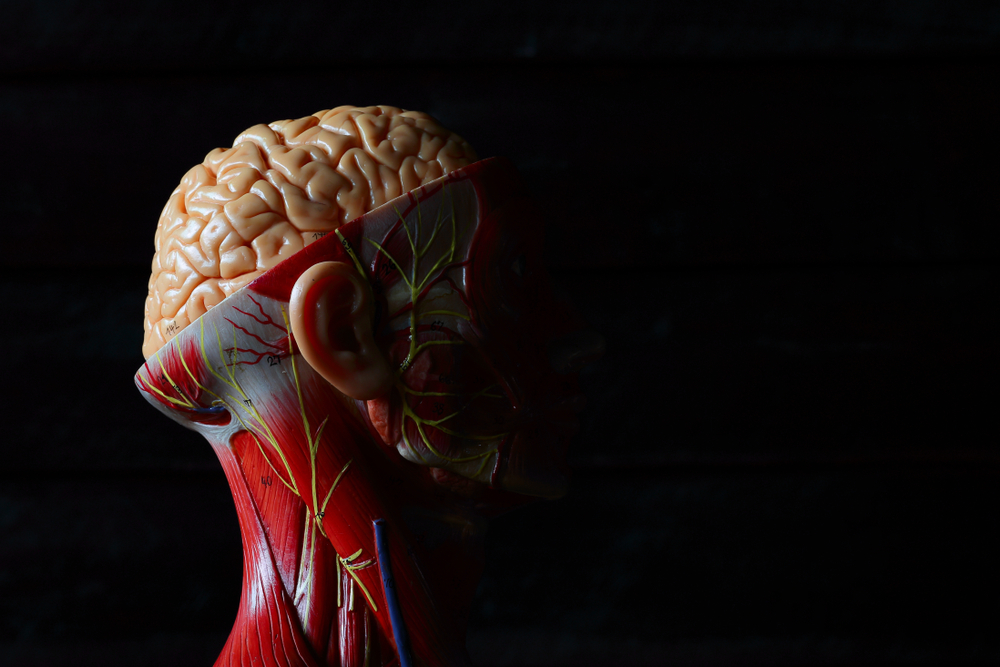
For over sixteen years, my clinical practice has centered on navigating complex neurological and structural pathologies. My work spans across functional neurology, functional medicine, and advanced chiropractic interventions. Throughout managing extensive concussion protocols, autoimmune conditions, chronic pain management, and dedicated postural correction cases, a foundational physiological baseline remains invariant: the micro-habits of daily movement and static positioning catalyze profound, systemic neurological consequences. Chronically poor positioning leads down a debilitating pathway marked by mechanical breakdown, neurological miscommunication, and vascular insufficiency. Conversely, proactive structural restoration drives longevity, sustained cognitive acuity, and optimal neuro-computational performance.
The Neurovascular Link: Reevaluating the Katz Study (2019)
To understand the profound structural influence on neurological performance, we look directly at groundbreaking data within hemodynamic research. A seminal study published by Katz et al. (2019) investigated the direct correlation between structural cervical spine correction and global cerebral blood flow (CBF). In this trial, researchers utilized advanced magnetic resonance angiographic technology to track blood flow vectors before and after the correction of cervical spinal subluxations and structural misalignments.
While preliminary retrospective recalls often understate clinical data points – with historical memories estimating a modest 9% change – the actual quantitative metrics published in the Katz study demonstrated a shocking 97.9% of evaluated patients experienced immediate, statistically significant improvements in cerebral perfusion (blood flow to the brain) parameters following targeted cervical spinal adjustment and lordotic restoration.
How does a structural intervention at the level of the cervical spine yield a near-doubling of cerebral blood flow metric compliance? To understand this physiological mechanism, we must evaluate how modern lifestyle shifts compromise human macro- and micro-vascular pathways.
The Mechanical Breakdown: Forward Head Posture and Vascular Occlusion
In an anatomically optimized state, the human spine should exhibit a balanced, upright neutral tone – retaining a precise cervical lordosis (a banana-shaped, forward curvature measuring approximately 30 to 45 degrees). This structural curve acts as an architectural scaffolding designed to minimize mechanical tension on the spinal cord and allow uninhibited nervous system and vascular transit. However, modern occupational demands have fundamentally corrupted this baseline.
Prolonged sitting at desks, extended driving, continuous computer work, and manual counter labor performed in front of the body promote a specific, destructive biomechanical cascade: the shoulders roll forward into scapular protraction, and the head migrates anteriorly away from the gravitational midline. This pathology is severely exacerbated by the pervasive presence of smartphones and handheld micro-computers. This behavior induces what is known clinically as Forward Head Posture (FHP) or colloquially as “Text Neck” or “Tech Neck”.
As the cranium shifts forward, the mechanical physics are severe: for every single inch of anterior migration, the relative weight of the head increases by approximately 10 pounds relative to the cervical musculature. This architectural shift imposes severe mechanical strain across the posterior cervical spinal chain, transforming flexible support tissue into highly hypertonic, protective muscular bands.
The Pliable Nature of Neurovascular Scaffolding
This localized muscular hypertonicity directly threatens cranial vascular dynamics. Human arteries and veins are fundamentally pliable, soft-tissue tubes that are highly susceptible to external compressive forces. Arteries possess a thicker, robust tunica media – composed of smooth muscle fibers and elastic tissue designed to withstand hydrostatic pressure and pump blood forcefully against gravity. Veins, by comparison, have vastly reduced structural musculature, rendering them highly compressible.
When chronic forward head posture causes the suboccipital, scalene, and levator scapulae muscles to contract with persistent hypertonicity, these tissues exert a continuous mechanical squeeze on the adjacent vasculature. Over time, this chronic muscular compression reduces blood flow velocity and volume through the vertebral arteries, which ascend through the foramina transversaria of the cervical vertebrae to form the basilar artery, supplying the entire posterior fossa and brainstem.
This localized compressive entrapment is easily verified through diagnostic clinical indicators like George’s Test. In this assessment, an examiner guides the patient’s cervical spine into extension and rotation to check for immediate signs of brainstem ischemia, such as transient nystagmus, vertigo, or lightheadedness.
The Dual-Action Model of Chiropractic Neuro-Structural Restoration
Reversing chronic neurovascular compression and optimizing long-term brain health requires a comprehensive approach beyond standard, passive stretching. Specialized chiropractic spinal care operates on a sophisticated dual-action physiological model:
- Articular Mechanoreceptor Activation & Joint Mobilization: High-velocity, low-amplitude (HVLA) neuro-structural adjustments (the chiropractic adjustment) restore physiological motion to restricted facet joints. As healthy biomechanical motion is restored, interstitial fluid mechanics are optimized – pumping inflammatory cellular waste and acidic cellular byproducts out of the joint capsule while allowing fresh, nutrient-rich synovial fluid to diffuse into the articular cartilage. This halts degenerative joint disease and osteophytic development.
- Ligamentous and Tendinous Deformation Tracking: While hypertonic muscle tissue responds rapidly to dynamic changes, deep spinal ligaments, joint capsules, and tendons are comprised of dense, cross-linked collagen networks designed primarily for rigid structural stability. These tissues exhibit viscoelastic properties, meaning they require consistent, prolonged mechanical loads to achieve permanent plastic deformation and structural restructuring.
To safely alter these rigid ligamentous bands and restore a healthy cervical curve, functional clinicians utilize specialized cervical traction orthotics and posture-corrective traction devices. These orthotic tools apply a sustained, precise mechanical vector to the cervical spine. Mirroring the fundamentals of physical exercise, this corrective tracking protocol relies on progressive adaptation: starting with brief durations to prevent acute myofascial guarding, and systematically scaling time as the baseline structural scaffolding remodels.
This process exploits Newton’s first law of motion: a neuro-structural system stuck in a pathological forward alignment will remain stuck until targeted mechanical forces introduce corrective motion, enabling the supporting ligaments to hold an upright, optimized posture over extended periods.
Concussion Mitigation, Q-Collar Biophysics, and Neuro-Spinal Communication
The neurological benefits of restoring correct spinal structure extend far beyond basic pain reduction and structural symmetry. Maximizing cerebral blood flow acts as a powerful preventative buffer against traumatic brain injuries and concussive forces.
This phenomenon is demonstrated by modern athletic safety technologies, such as the Q-Collar utilized in high-impact sports. The device applies a gentle, localized pressure over the internal jugular veins. This mild compression slightly slows outward venous drainage, safely retaining a small volume of extra blood inside the cranium. This fluid volume creates a protective hydrostatic cushion – a “fluid-armor” effect – that reduces the physical movement of the brain within the skull during an impact, significantly lowering the risk of traumatic axonal shear waves and concussive injury.
Correct structural posture achieves a similar, natural neuro-protective benefit. By removing suboccipital compression and restoring appropriate cervical lordosis, we maximize vertebral arterial supply and optimize venous return, ensuring the brain maintains an ideal hydrostatic environment rich in oxygen, glucose, and essential nutrients. Furthermore, correcting forward head posture removes chronic physical stretch and tension from the cervical spinal cord and nerve roots.
This decompression optimizes global afferent nerve flow, allowing uninhibited communication between peripheral mechanoreceptors and central processing centers. The brain receives clear, accurate environmental sensory information, enabling it to execute highly accurate motor commands, balance responses, and homeostatic regulation.
Conclusion: Taking Action on Postural and Brain Health
Protecting long-term brain health, resolving chronic pain, and achieving true postural symmetry requires a systemic commitment to structural care. If you are ready to evaluate your current neuro-structural alignment, map your baseline cerebral ergonomics, and implement an individualized corrective care program, contact our clinical team today.
You might also be interested in: