
Do you spend any time thinking about how your small daily habits affect your overall life? Most of us consider how our habits impact our finances or our waistlines, but we rarely consider how the way we sit, stand, and move shapes the very organ that controls everything: our brain.
Over the past 16 years, I’ve worked with patients across the spectrum – from concussion recovery and autoimmune cases to chronic pain and postural correction. Through functional neurology, functional medicine and chiropractic care, I’ve seen firsthand that the small things we do throughout the day make a massive difference in our long-term outcomes. Today, we’re diving into a critical aspect of longevity: how your posture directly affects your brain health.
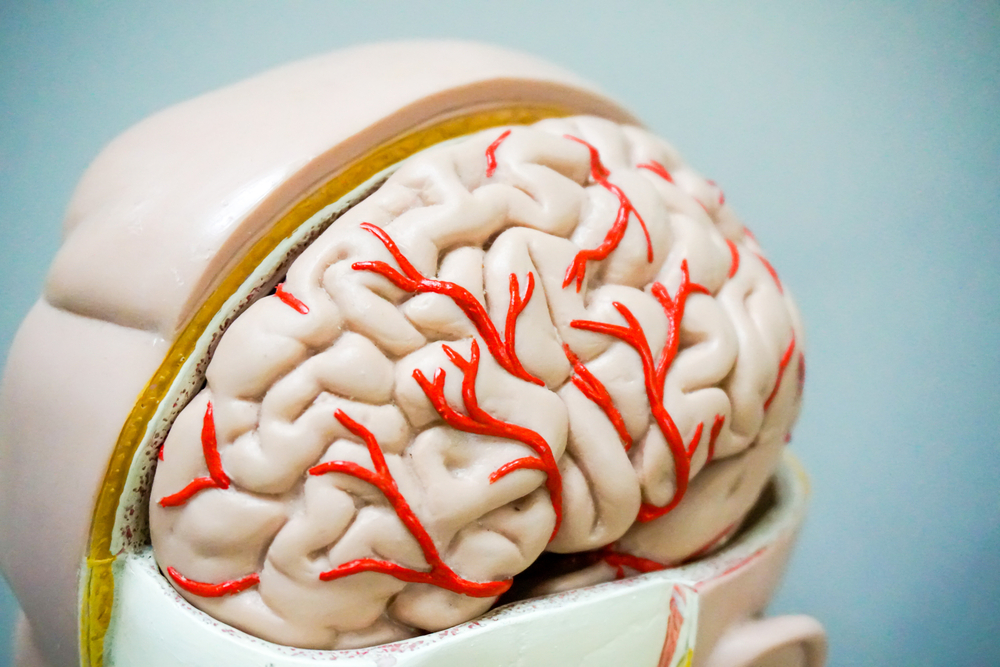
The Science of Blood Flow: The 97.9% Connection
A groundbreaking study published by Katz et al. in 2019 (often cited in the context of Upper Cervical Chiropractic Research) explored the relationship between the cervical spine’s shape and cerebral blood flow. While many clinicians previously thought the impact was marginal, the data suggests something revolutionary. Proper restoration of the cervical curve can lead to a significant improvement in blood flow to the brain – with some findings indicating improvements as high as 97.9% in specific arterial measurements following corrective care.
Why does this happen? Think of your arteries and veins as pliable tubes. While arteries are more robust due to their muscular walls, they are still susceptible to mechanical compression. When your head shifts forward – a condition often called ‘Tech Neck’ that’s caused by looking down at digital devices – the muscles in your neck must contract with immense force just to keep your head upright. This chronic muscle tension, combined with the structural misalignment, can physically squeeze the vessels that supply your brain with oxygen and nutrients.
The Anatomy of “Tech Neck” and Brain Fog
Most of us spend our days in a ‘forward’ posture:
- Leaning into computer screens
- Looking down at smartphones in our pockets
- Hunching over steering wheels or countertops
When your head moves forward by just one inch, it doubles the weight your neck muscles must support. This doesn’t just cause ‘stiff shoulders.’ It changes the ‘scaffolding’ of your nervous system. When the structural curve of the neck (the cervical lordosis) is lost, it stretches the spinal cord and places mechanical stress on the brainstem.
How Chiropractic Care Restores Brain Function
Chiropractic care works on two distinct levels to reverse these negative trends:
1. Joint Mobilization and Waste Removal
Properly moving joints act like pumps. When a joint moves through its full range of motion, it brings nutrients in and flushes acidic waste products (like lactic acid and inflammatory cytokines) out. Without this motion, joints degenerate, leading to chronic inflammation that can affect the entire nervous system.
2. Ligament and Tendon Remodeling
Muscles are easy to change, but ligaments and tendons are ‘tougher’ by design. They provide stability. To change a habituated posture, we often use traction devices that gently retrain the body’s scaffolding. It’s like exercise for your structure – it starts slow, but once the ‘snowball’ starts rolling, the body begins to hold the correct position naturally.
Beyond Pain: Protection and Communication
Improving posture isn’t just about getting rid of a headache. It’s about protecting the brain. For example, increased cerebral blood flow provides a ‘cushioning’ effect. In sports science, devices like the Q-Collar work by slightly increasing blood volume in the cranium to reduce the risk of concussions. By restoring your natural posture, you are essentially providing your brain with its own built-in defense mechanism.
Furthermore, a ‘clear’ spine means better communication. When you remove the stress from the spinal nerves, your brain receives more accurate data about your environment. This allows for better motor output, better balance, and more efficient cognitive processing.
Conclusion: Start Your Posture Reset Today
Your body is an object in motion. If you stay stuck in a forward-leaning, ‘slumped’ position, your biology will adapt to that state. But if you begin the process of restoration today, your body will gravitate toward health.