
Reading Time: 6 minutes
Do you know where you are at physically? Even more importantly, do you know where you should be?
Many people ask themselves these exact questions but have no idea where to find the answers. When you go for your annual check-up, get your blood drawn, and receive a call saying your labs are “normal” with “no flagged values,” you probably assume you’re in perfect health.
But there is a silent trap in modern wellness: “average” does not mean healthy.
To understand true wellness, we must shift our perspective from standard, reactive medicine to a holistic “Health Scorecard” powered by normative data and built on the pillars of foundational healthcare – including diet, exercise, sleep, stress management, and chiropractic care.
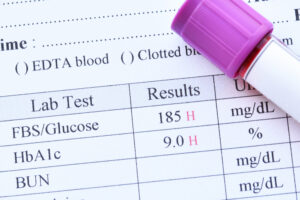
1. The Trap of “Normal” Lab Reference Ranges
Most patients look at their lab results and celebrate when they see no flags. However, those standard reference ranges don’t represent optimal health; they represent a mathematical average of the population.
Standard lab reference ranges are calculated using a standard deviation where 94% to 96% of the population is swept into the “normal” category, with 2% flagged as high and 2% flagged as low.
But ask yourself: Is 96% of our population actually healthy?
Consider the statistics:
- 70%+ of the population we are being compared to has at least one chronic disease.
- 40% to 50% of the entire population has more than one chronic disease.
When you compare your blood markers, organ function, or metabolic health to the “normal” range, you are comparing yourself to a sick population. True health is not the absence of a laboratory flag; it is the presence of optimal physiological function.
2. What is Normative Data? (Your True Health Scorecard)
If standard lab ranges are keeping us in the dark, where do we find the real answers? The answer lies in normative data – large-scale population data that establishes what is functionally healthy, balanced, and robust.
Think of normative data as a financial statement for your physical body. It is easy to log into your online banking app, look at your assets and liabilities, and immediately calculate your net worth. But we rarely have that same clarity when it comes to our physical well-being.
A health scorecard gives you a clear net worth of your body across critical functional domains:
- Cardiovascular endurance
- Balance and stability
- Flexibility and joint flexion
- Physical strength
Normative data tells you exactly where you stand. For example, you can easily look up the normative comparison databases online for foundational movements:
- How many consecutive push-ups should an average 40-year-old be able to perform?
- What is the normative standard for squats or the sit-and-reach flexibility test?
- How does your heart rate recover during a three-minute step test?
Measuring yourself against these functional standards is not meant to make you feel bad. It is a diagnostic tool designed to pinpoint where your body is falling behind so you can focus your energy before symptoms or chronic diseases set in.
3. The 5 Pillars of Foundational Healthcare
True wellness cannot be achieved by addressing only one aspect of your lifestyle. In our clinical practice, working with over 5,000 patients over the past 16 years, we have found that a holistic approach combining functional neurology, functional medicine, and chiropractic care provides the ultimate framework for longevity.
Here are the five pillars of foundational healthcare that keep your health scorecard in the green:
Pillar I: Chiropractic Care & Functional Neurology
At the center of your health is your nervous system. Functional neurology shows us that the brain controls and coordinates literally every cell, tissue, and organ in the human body. Chiropractic care removes structural and neurological interference along the spine, ensuring clean communication between your brain and your body. Without a properly functioning nervous system, your body cannot efficiently regulate blood pressure, coordinate movement, or recover from daily stressors.
Pillar II: Exercise & Functional Physical Strength
Exercise instantly improves functional capacity at any age. While cardiovascular health is vital (tracked by tests like the three-minute step test), strength is your ultimate armor against aging.
- The Fall Risk Connection: Loss of lower body strength is one of the single largest risk factors for ending up in an assisted care or nursing home facility. When you lose lower body strength, your ability to correct a sudden trip or slip vanishes. You fall, and as the saying goes, nothing good comes out of a fall. Maintaining functional lower body strength at ages 30, 40, and 50 is the best insurance policy you can write to protect your future independence.
Pillar III: Diet, Nutrition & Body Composition (Functional Medicine)
Functional medicine focuses on nutrition, organ synergy, and how the entire body correlates as a unified organism. One of the clearest metrics of metabolic health under this pillar is body fat percentage.
While many people avoid measuring body fat because they don’t want to see the numbers, it is a vital marker on your health scorecard. Below is the clinical normative data for body fat percentages:
| Classification | Males (Body Fat %) | Females (Body Fat %) |
| Athletic | 5% – 10% | 8% – 15% |
| Good | 11% – 14% | 16% – 23% |
| Acceptable | 15% – 20% | 24% – 30% |
| Overweight | 21% – 24% | 31% – 36% |
| Obese | Over 24% | Over 37% |
How is body fat measured? In a clinical setting, we use two main methods:
- Skinfold Calipers: Physically pinching and measuring skin thickness at multiple specific positions on the body and comparing them to mathematical charts. While dependent on practitioner skill, it is highly reliable.
- Bioelectrical Impedance (BIA): Utilizing hand-held or foot-plate electrodes to send a safe, low-level electrical signal through the body. The conductivity of the tissues determines your approximate fat-to-muscle ratio.
Pillar IV: Sleep & Brain Recovery
Sleep is the primary restorative state for both functional neurology and immune health. During sleep, your brain clears metabolic waste, solidifies neural pathways, and repairs cellular damage. Poor sleep directly compromises your cardiovascular resilience, making metrics like blood pressure harder for the body to self-regulate.
Pillar V: Stress Management
Chronic stress places the nervous system into a perpetual, sympathetic “fight-or-flight” state. This elevates blood pressure (which normatively should sit around 120 over 80, though pharmaceutical thresholds have shifted over time) and degrades digestive health, hormone balance, and muscular flexibility. Incorporating mindfulness, breathing exercises, and nervous system regulation is non-negotiable for true cardiovascular and mental health.
4. The Power of Your Social Circle on Health
Why do so many of us remain unaware of where we stand on the health scorecard? Because we suffer from a limited perspective.
Human beings naturally hang out with people who are similar to them. If your friends drink, you are likely to drink; if they smoke, you are likely to smoke; if they run or go to the gym, you will likely do the same. Because of this, you don’t get a true, cross-sectional view of what “normal” actually is. You only see what is normal for your specific segment of peers.
This is why clinical studies require vast, diverse sample sizes. A study of 10 people is far less accurate than a study of 10,000, which itself is less accurate than a study of 10 million. The larger the sample size, the more representative the data is of the entire population. Normative database standards give you access to this massive population-wide dataset, stripping away the biases of your immediate social circle.
5. Take Action: Grade Your Health Scorecard Today
It is infinitely easier to put focus on your health scorecard at age 30, 40, or 50 than it is to wait until your 70s or 80s when the body has lost its adaptive capacity and severe symptoms arise.
Here is how you can take control of your health benchmarks today:
- Schedule a functional assessment: Don’t just get a blood draw. Request functional movement screens, joint flexibility checks, and neurological balance testing.
- Test your body composition: Find a local wellness center or chiropractic office that can perform skinfold caliper or bioimpedance testing.
- Audit your strength and flexibility: Research normative databases for age-specific standards on push-ups, squats, and cardiovascular recovery (like step tests).
- Embrace chiropractic care: Keep your nervous system fully integrated and aligned so that your brain can properly govern your metabolic, muscular, and organ functions.
Stop striving to be “average” in a society where average is chronically ill. Measure your functional health scorecard, find your baselines, and elevate your foundational health to where it truly belongs.
What is the difference between standard lab ranges and normative data?
Standard lab reference ranges are mathematically derived from standard deviations of the general population (where 94-96% are grouped as “normal”). Since over 70% of the population has chronic disease, these reference ranges compare you to an unhealthy average. Normative data, conversely, measures functional capabilities, strength, flexibility, and physical health metrics to identify optimal biological benchmarks.
Why is lower body strength critical as we age?
Loss of lower body strength is a leading predictor of fall risk, which is one of the primary reasons aging adults lose independence and require assisted living or nursing home care. Maintaining muscle mass in the lower body allows for rapid postural corrections during slips or trips, preventing severe trauma.
What are the main ways to measure body fat percentage in-office?
Clinicians primarily measure body fat using skinfold calipers to pinch skin thickness in multiple positions, or bioelectrical impedance (BIA) devices which send minor electrical signals through hand-held electrodes to assess tissue conductivity. Both methods provide highly practical baselines for body composition tracking.
You might also be interested in: